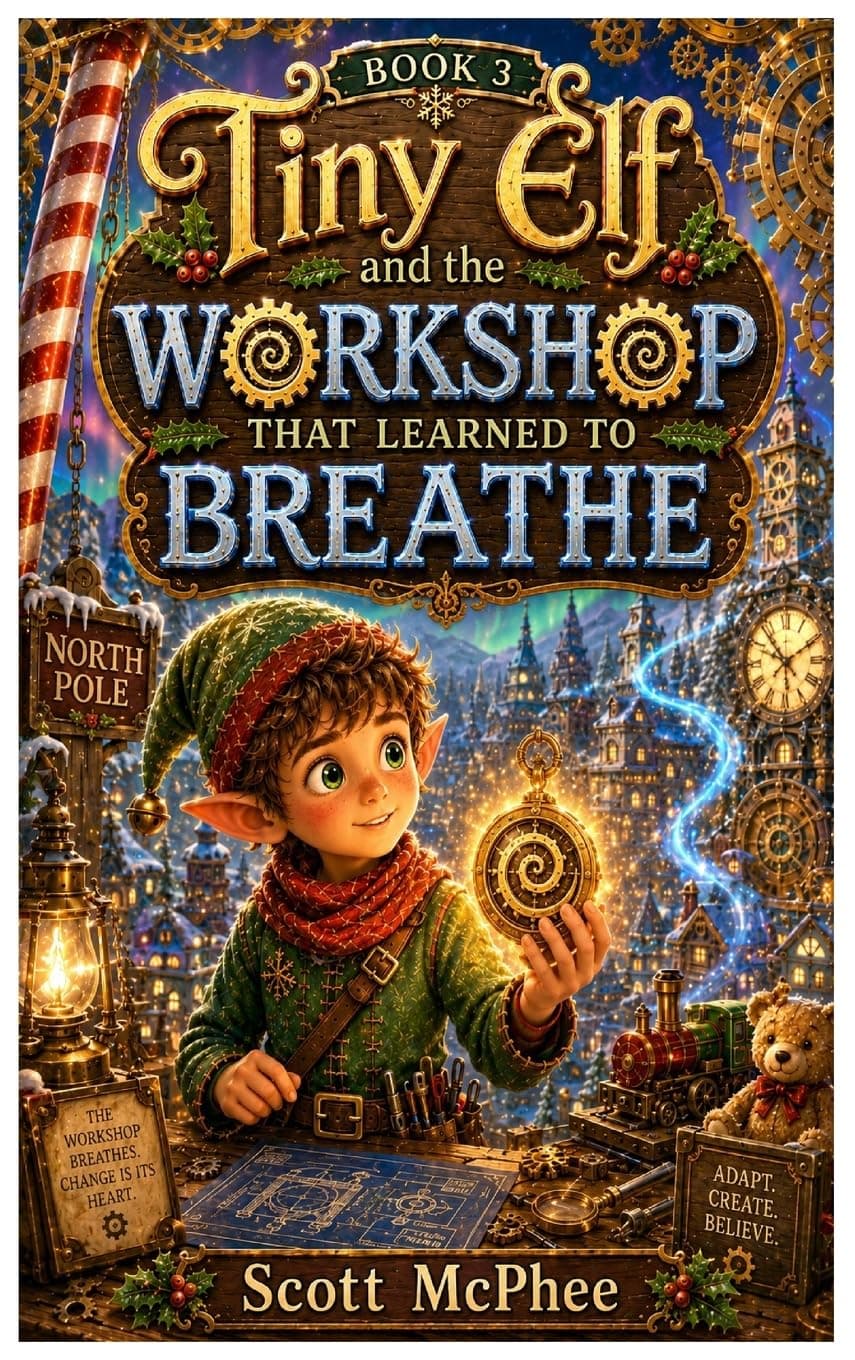
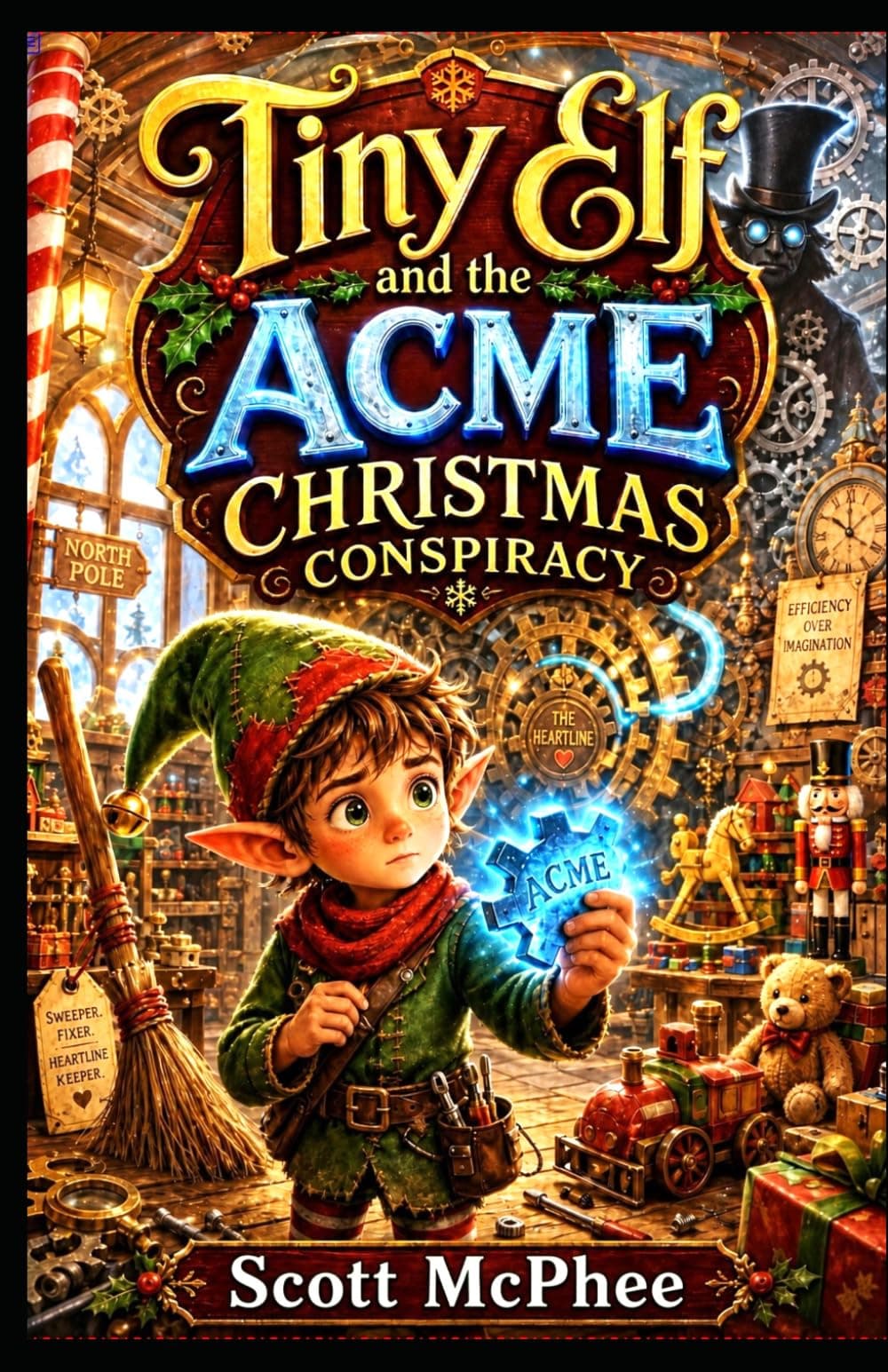
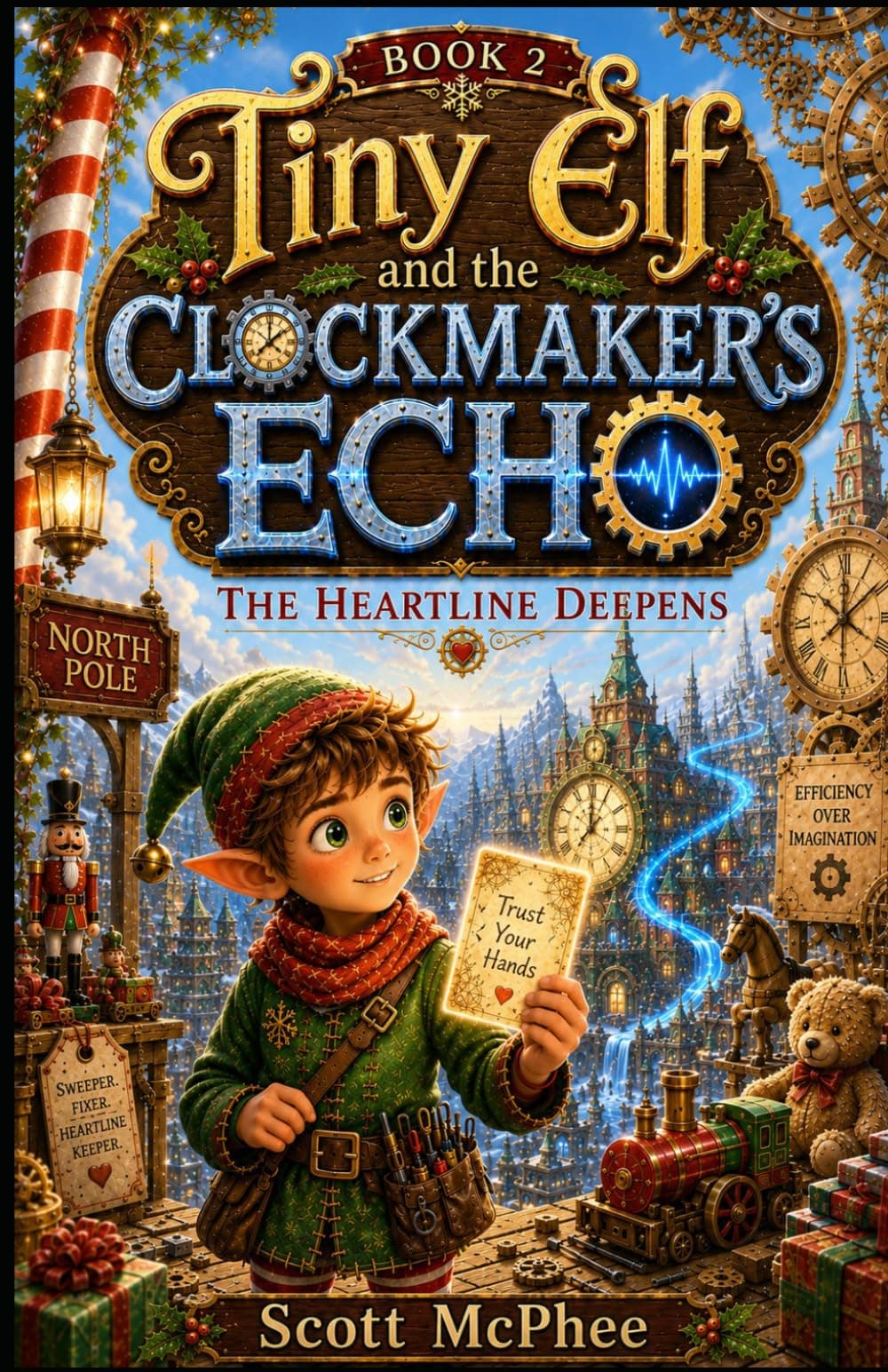
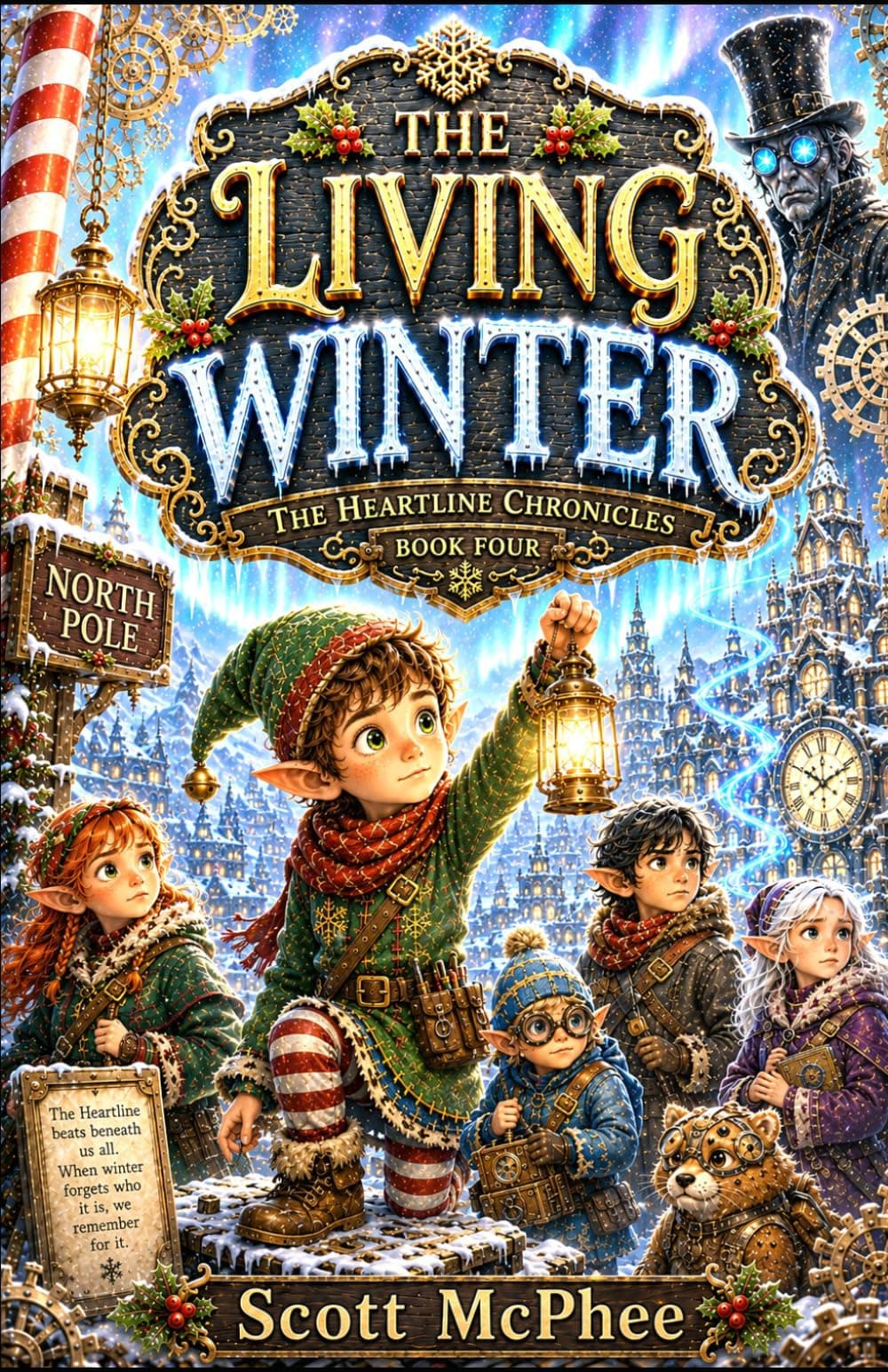
For centuries, the North Pole has run on the Heartline, the steady warmth that keeps the workshop the same reliable, wondrous place every child imagines it to be. But steadiness was never the whole story. Long before Tiny Elf was born, a Keeper descended into a hidden chamber beneath the Great Gear and discovered a second pulse buried inside the Pole itself, not a rhythm that preserves, but one that adapts. Too dangerous to leave whole and too important to erase, she broke it into fragments and hid them across the workshop, trusting that someday someone small enough to be overlooked, and steady enough to be changed by what they found, would be ready to piece it back together.
That someone is Tiny Elf. In this third installment of The Heartline Chronicles, Tiny presses his palm to the workshop floor and feels a question rise to meet him for the first time. Alongside his sharp-eyed friend Pip, the anxious inventor Zolo, the endlessly chattering comic relief Zap, and the steady, grieving Charlie, he begins uncovering the Keeper's scattered map, a chart that does not show distances or directions but something rarer: the workshop's hidden capacity to change.
Not everyone welcomes what he finds. Rowan, a devoted inspector shaped by old harms and older fears, leads the Preservationists, a faction of elves convinced that the sealed corridors were closed for good reason and that any reopening invites chaos into a place children depend on to stay safe. Rowan is not a villain so much as a conscience under strain, torn between duty and grief, and his resistance forces Tiny to reckon with a harder truth: that unchecked adaptation curdled once before into something the book calls the cold lesson, a colder answer that mistakes correction for care and perfection for love, and that has begun quietly reshaping toys, and children, in its own image.
As the map's fragments converge, Tiny and Pip must descend past comfortable certainties into the workshop's oldest, most guarded chambers, guided by Mrs. Claus and Santa and shadowed by the Preservationists' growing alarm. There they confront a presence that believes keeping everything the same is the only form of safety, and another that believes tearing everything open is the only form of honesty. Between those extremes lies the harder, quieter work the Keeper always meant to protect: an unmaking and remaking of the workshop's oldest lesson, achieved not through force but through patient, honest listening.
Tiny Elf and the Workshop That Learned to Breathe is a middle-grade fantasy about apprenticeship, inherited responsibility, and the difference between preserving something and keeping it alive. It asks what it means to tend a beloved, imperfect system without either freezing it in place or breaking it apart, and it trusts young readers with real ideas about grief, institutional fear, conscience, and the courage required to let a good thing become something new without losing what made it good in the first place. Warm, strange, and unexpectedly philosophical for a Christmas story, it closes the arc begun in Tiny Elf and the ACME Christmas Conspiracy and Tiny Elf and the Clockmaker's Echo, ending not with a tidy resolution but with a workshop, and a cast of characters, that have learned to hold change and continuity at once: a house that finally knows the difference between peace and suppression, and a story that, like the Keeper's own knot, was never meant to close.
Scott McPhee, a retired university professor and dean who spent more than five decades writing nonfiction before turning to fiction in retirement, brings a gentle, unhurried voice and a genuine interest in how institutions learn to change to this tender conclusion of the Heartline Chronicles, proof that even the North Pole's oldest machinery still has more to learn about growing up.